
Losing Mum: When Death Feels Unbearably Near
- Alan

- Jun 26
- 4 min read

Only several months ago, I was given extremely painful news. News that would result in months of a loved one deteriorate because of a terminal illness.
When I received the news, I was in the car, about to pick my son up from school, hundreds of miles away. I did not know how to respond, how to feel, or even what to say. It seemed as though life had just paused.
It was my mum.
There are moments when ordinary places become marked forever. A car park. A school run. A phone call. A conservation you wish had only been a dream. One moment, life is moving as normal; the next, everything changes. Yet I still had to get out of my car and collect my son. I had to carry on with the responsibilities of the day. But inwardly, something had cracked.
Being hundreds of miles away made the news feel even heavier. I wanted to be present, to do something, to say something helpful, to just embrace my mum. But there are moments when love is interrupted by grief, and there is nothing more available. The place where love exists, grief breaks in.
During this time, and upon spending time chatting with my sisters, one thing I have learnt, practically that is, albeit I have been aware of it theoretically within my role as a Pastor, is that grief doesn’t break in during death, especially in our case, it began upon the diagnosis. It permeated all throughout my being, from the diagnosis, to the updates, and to the visits in which there are noticeable difference within the person you love.
Cancer robbed us of Mum, and left us with grief.
For many of you reading this, you may have experienced the loss of someone you love due to cancer. Cancer doesn’t just affect the person diagnosed, it enters into the life of every single person close to the individual. It changes everything. It changes the conversations, the routines, it changes long
term plans and it changes our prayers. It bring the inevitable waiting, fear, pain, sorrow, suffering, disappointment, exhaustion, and a kind of grief that I haven’t been able to explain until now, albeit limited.
To watch someone you love deteriorate is a particular kind of pain. You see changes you wish you could reverse. You notice weakness where there used to be strength. You find yourself grieving what has already been taken while fearing what is still to come.
And then the day came. Mum died!
Those words still feel heavy. There is a finality to death that no amount of preparation can remove. Even when you know it is coming, even when illness has warned you, death still arrives with a terrible weight.
Death feels different when it is no longer distant. It is one thing to believe true things about death. It is another thing to feel its nearness in your own family. Death is no longer an abstract doctrine. It has come unbearably near.
Psalm 13 says, “How long, O LORD?”
One of the mercies of Scripture is that it does not force grieving people to pretend. The Bible does not rebuke every tear or silence every ache. The Psalms give language for sorrow: “How long, O LORD?” is not the cry of an unbelieving heart, but of a wounded heart still turning toward God. Lament is not the absence of faith. It is faith speaking from the place of pain. It is bringing grief honestly before the Lord without trying to make it sound more acceptable than it feels.
John 11 has become precious to me in a deeper way. Jesus comes to the tomb of Lazarus and enters a scene full of grief. Mary is weeping. Martha is mourning. Death has entered a home. And then John gives us those two words:
“Jesus wept.”
Jesus knew He was about to raise Lazarus from the dead, and yet He still wept. Resurrection hope did not cancel present sorrow. The Greek word John uses is δακρύω, dakryō, meaning to shed tears or to weep. The Son of God does not stand coldly at the edge of human grief. He enters it.
That matters to me now in a way I didn’t see it before. It tells me that my tears are not faithlessness. If Jesus wept in the face of death, then grief cannot be treated as a failure of faith. Scripture also refuses to sentimentalise death. In 1 Corinthians 15:26, Paul calls death “the last enemy.” The word is ἐχθρός, echthros, meaning an enemy, adversary, or hostile one. Death wounds. Death separates. Death leaves silence where a voice once was. Even when illness has warned you, death still arrives with terrible weight.
Yet Scripture does not leave us without hope. In 1 Thessalonians 4:13, Paul says that believers do not “grieve as others do who have no hope.” He does not say Christians do not grieve. The word he uses is λυπέω, lypeō, meaning to grieve, sorrow, or experience distress. Christian grief is still grief. But it is not grief abandoned to hopelessness.
I believe in the resurrection, but I still miss my mum. I trust Christ, but I still feel the ache of her absence. I can be thankful for her life and still hate what cancer took. These things are not contradictions. They are part of grieving as a Christian in a world where death has been defeated, but not yet destroyed.
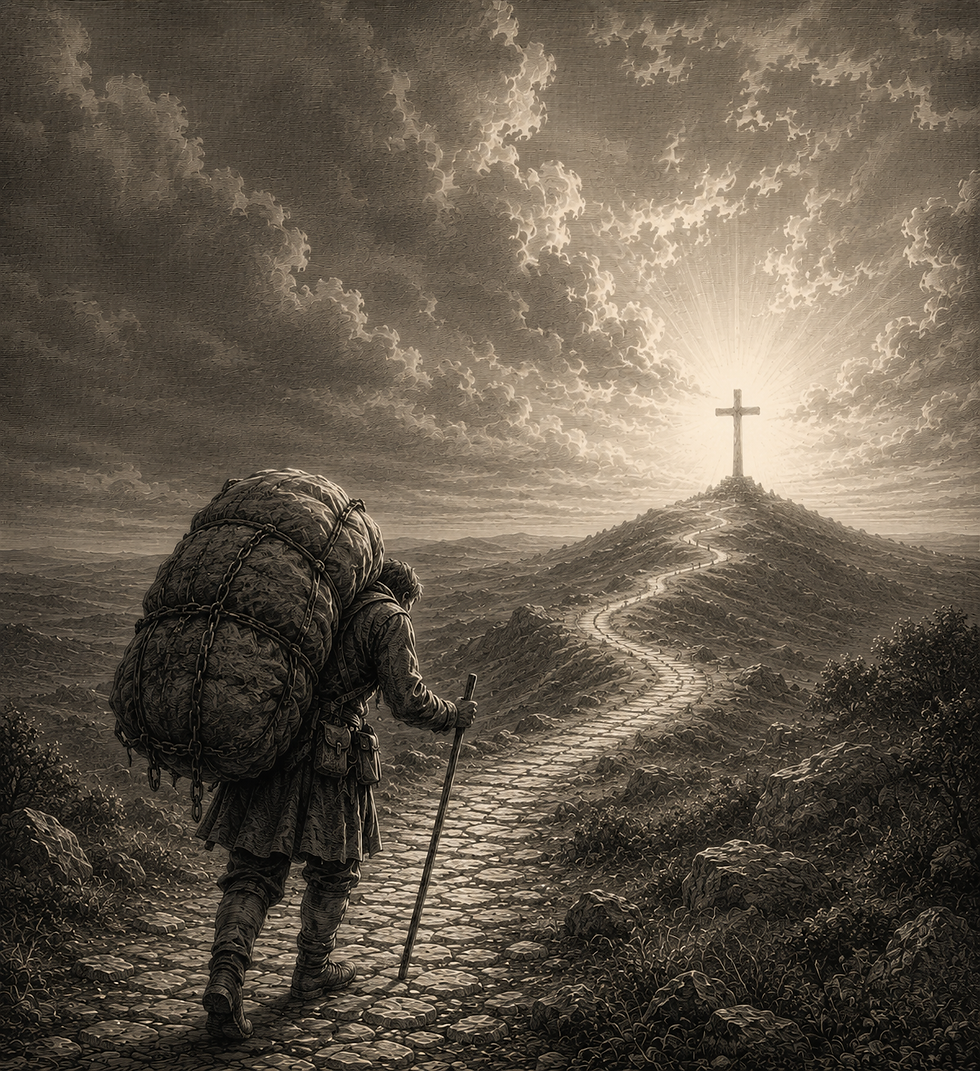
This is where the cross speaks again. When death feels unbearably near, the cross tells me that God has come nearer still. At Calvary, the Son of God entered suffering, darkness, and death. The cross does not give me a shallow answer to grief. It gives me a crucified Saviour. But the cross is not the end of the story. Jesus did not only die; He rose. The resurrection does not tell me that death does not hurt. It tells me that death will not win. The empty tomb does not mock my tears; it promises that one day they will be wiped away.
So I grieve. I remember. I ache. I lament. But I do not grieve without hope. Death feels unbearably near, but our The Good Shepherd is nearer. The Saviour who wept at a tomb has entered death Himself, and He has risen.
The cross still speaks, and the resurrection still has the final say!


Comments